Doing the Right Thing Means Knowing Where Our Products Come From
Service isn't limited to the causes we support or the communities where we volunteer. Sometimes, it means taking responsibility for the choices we make as a company—and asking difficult questions about the products we put our name on.
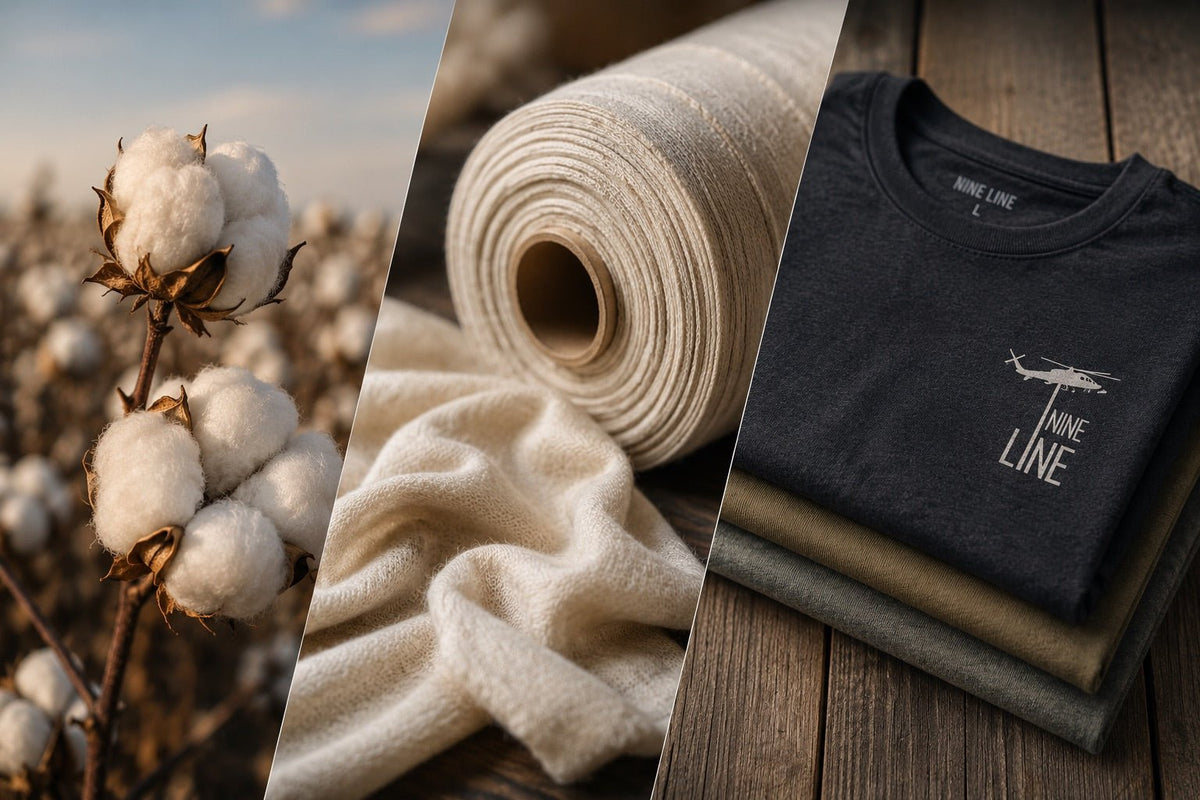
In 2023, Nine Line Apparel's commitment to responsible sourcing led to one of those questions: Where does the cotton in our apparel actually come from?
Nine Line had already spent years working to bring more of its manufacturing back to the United States and supporting American jobs. But even with safeguards in place, we believed there was a responsibility to look deeper into our supply chain.
Rather than relying solely on documentation provided by suppliers, Nine Line began independently testing materials to verify their geographic origin. That testing revealed that cotton in products supplied to Nine Line was consistent with cotton originating from China's Xinjiang region—an area closely associated with concerns over the forced labor of Uyghurs and other persecuted groups.
For us, the people behind those materials mattered more than the products themselves.
Nine Line stopped purchasing the affected products and sought answers about how the cotton had entered the supply chain. It was a decision rooted in a simple belief: no person should be forced to suffer so that someone else can buy a less expensive T-shirt.
The discovery also highlighted a much larger challenge facing the apparel industry. Modern supply chains can stretch across countries and involve numerous manufacturers, mills, suppliers, and distributors. That complexity makes transparency important—and makes verification even more important when human rights are at stake.
Nine Line's response was guided by a principle familiar to many in the military community: trust, but verify.
Being Made in America whenever possible is part of our commitment to the communities we serve, but responsible manufacturing goes beyond geography. It means caring about the people who grow the cotton, make the fabric, sew the garments, and earn their living at every stage along the way.
We won't pretend that one company can solve the challenges facing a global industry. What we can do is take responsibility for our own decisions, ask questions when something doesn't look right, and be willing to act when the answers don't align with our values.
Because the people behind the products we wear deserve dignity, fair treatment, and the freedom that we too often take for granted.
We Remember: Honoring 9/11 Heroes
Standing With One of Our Own